Winter wakeboard training: 6 exercises to ride stronger next season
By The Peacock Brothers · · 3 min read
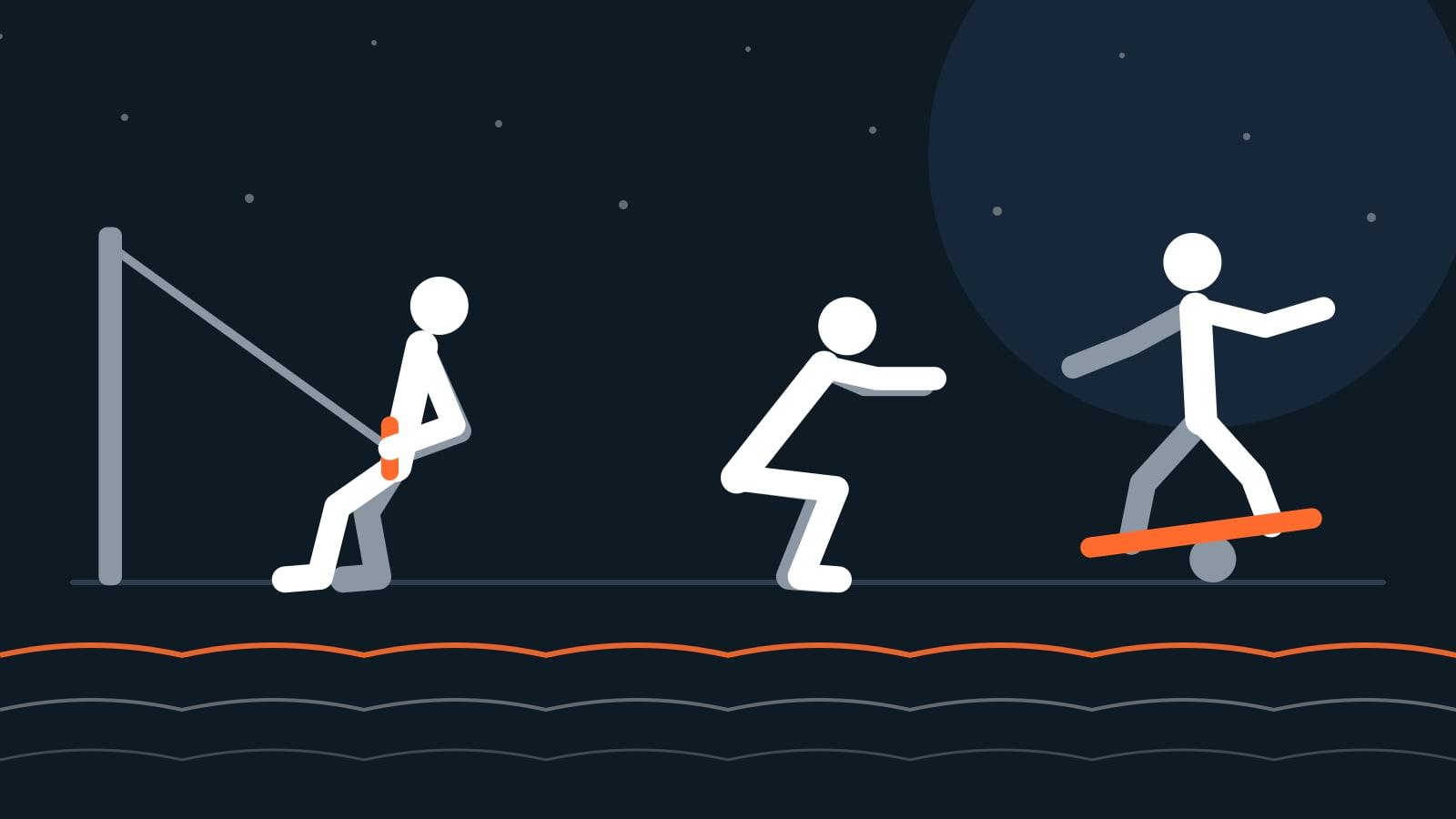
The parks are shutting, the wetsuits are drying out for the last time and the first ride of next season feels a long way off. But the riders who come back strongest in spring aren't the ones who sat it out. They're the ones who kept their legs, back and core ticking over through the winter.
You don't need a gym or hours a week. Three short sessions, the six moves below and a bit of consistency is enough to land your first sessions back feeling like you never stopped.
Why train off the water?
Cable wakeboarding asks a lot of your body in short bursts. You hold a pull against the cable on every edge, soak up landings through your legs, twist through spins and make hundreds of tiny balance corrections on every lap. When you stop riding for three or four months, that strength and those reactions fade.
Off-water training keeps them topped up. It also protects you: stronger legs and a steady core take the strain off your knees and lower back, which is where most riding niggles start.
The six exercises
Each one is picked for a job it does on the water. Start with the reps shown, move slowly and well, and only add weight when the last few reps feel easy.
01 Squat to calf raise
3 × 12- Feet shoulder-width, sit your hips back and down until your thighs are level with the floor.
- Chest up, stay low, weight through your heels.
- Drive up, then rise onto your toes at the top. Lower slowly.
On the water: Chest up, stay low: that's your riding stance. Every landing is a squat too, so strong legs soak up kickers and save your knees.
02 High-anchor row in edge stance
3 × 12- Fix a band high, above head height: the top of a door (with a door anchor) or a post.
- Sit into your riding stance, arms long towards the band, and lean back against it.
- Pull down and back to your front hip, shoulders down away from your ears. Let it out slowly.
On the water: The cable rope comes down from a tower, so it pulls you up as well as forward. Pulling down and back to the hip is how you keep the handle low and stop the cable lifting you out of your stance.
Why high? On a cable the rope comes down to you from a tower several metres up, so it pulls you up as well as forward, not flat like a boat. Fix the band above head height (a door anchor over the top of a door works well) so you train against the same angle. Make sure whatever you anchor to can't move.
03 Plank with shoulder taps
3 × 30 seconds- Hands under your shoulders, body in a straight line from head to heels.
- Lift one hand and tap the opposite shoulder, then swap.
- Keep your hips still: don't let them rock side to side.
On the water: Your core links the board to the handle. A stable middle keeps you stacked over the board when the pull comes on.
04 Russian twist
3 × 20 (10 each side)- Sit with knees bent and lean back until you feel your stomach working.
- Hold a ball or weight and turn your shoulders to touch it by one hip, then the other.
- Lift your feet off the floor when it gets easy.
On the water: Spins start with your shoulders. Rotation strength gives you cleaner 180s and 360s and more control on the way round.
05 Balance board
4 × 45 seconds- Stand on a balance board with your feet at riding width, knees soft.
- Keep the edges off the floor by shifting from your ankles and hips, not your arms.
- Turn your head to look over your front shoulder, like you would on the water.
On the water: Balance is edging. Small, quick corrections from your ankles are exactly what holds an edge and lands a rail.
A balance board is the best bit of kit you can buy for winter riding. If you don't have one, stand on one leg on a folded towel or a cushion and do the same.
06 Skater hops
3 × 16 (8 each side)- Jump sideways from one foot and land softly on the other.
- Sink into the landing, let the back foot swing behind, then push off again.
- Stay low and land quietly. Speed comes later.
On the water: Pop and soft landings in one move. It builds the spring for ollies and the control to stick the landing.
At home or at the gym
You don't need a gym for any of this. A mat, a wall, a sturdy chair and a backpack with a few books in it cover most of it, and a resistance band (about £10) covers the rest. If you do train at a gym, swap the band for a cable machine and the backpack for dumbbells or a kettlebell.
Our 8-week plan gives you both versions of every session, so you can switch between home and gym whenever you like. Week 1 is mostly mobility (shoulders and hips), then it builds into strength, box jumps and side-to-side lunges, and finishes with riding circuits. No two sessions are the same.
Don't skip mobility
Strength is only half of it. Tight hips and hamstrings pull you out of a good stance, and stiff shoulders make handle passes harder than they need to be. Finish every session with ten minutes of stretching: hips, hamstrings, chest and the back of your shoulders. If you sit at a desk all day, this matters even more.
This daily stretching routine is a good one to follow along with:
Keep it going
Plan your weeks, write down what you did and nudge the numbers up as you go. Eight weeks of steady work is enough to feel the difference on your first lap back.
For more ways to keep your riding sharp while the parks are closed, read how to keep your riding strong in the off-season.
Come and ride with us
Coached cable wakeboard camps for every level, in the UK, Europe and Asia.
- Wake Park Cambodia: TPB Takeover9–16 Jan 2027 · Cambodia
- Hipnotics Spring Camp 20278–15 May 2027 · Türkiye
- Plastic Playground 2 Day Camp5–6 Jul 2027 · United Kingdom